
More features mean more ways to shape sound around you.
Thanks to constant innovation, modern digital hearing aids come with a wide variety of features designed to improve the listening experience.
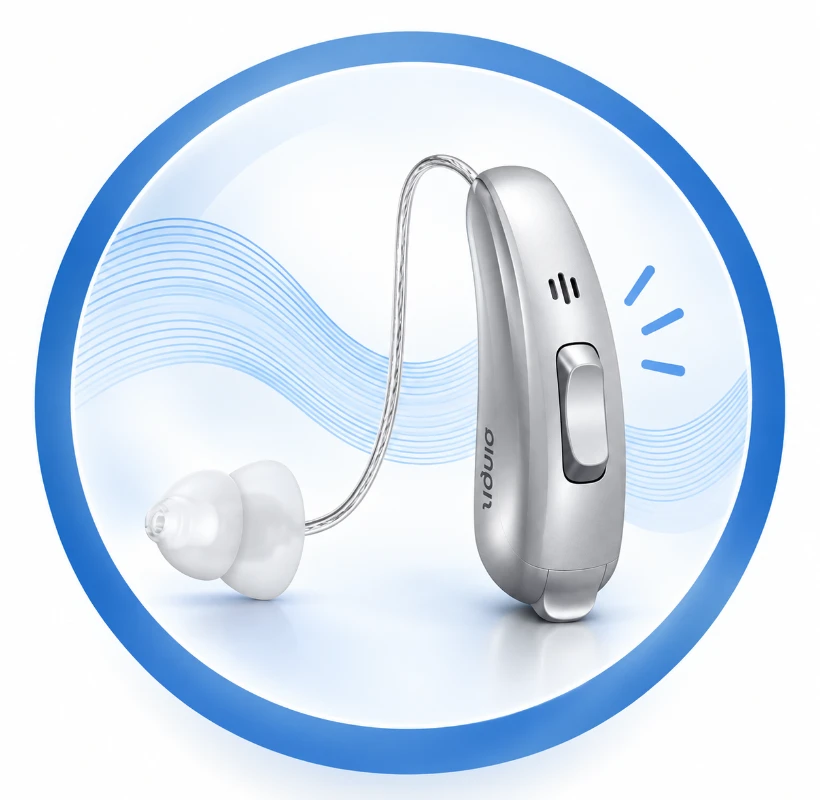
See what each hearing-aid feature actually does for you.
Select a feature to see its function and practical benefit. Select a feature to see what it does and when it is useful. Not every device includes every feature.
We match the feature set to your hearing and your listening environments.
Choose a feature
Digital Noise Reduction
Less distracting noise and improved clarity.
Impulse Noise Reduction
Sharp sounds are less likely to be over-amplified while speech remains emphasized.
Wind Reduction
Sharp sounds are less likely to be over-amplified while speech remains emphasized.
Feedback Management
More comfortable listening with fewer feedback noises.
Directional Microphone Systems
Greater speech understanding with less distracting noise.
Binaural Processing
Clearer sound capture, fewer processing delays, and less unwanted noise.
Multiple Compression Channels
Clearer sound capture, fewer processing delays, and less unwanted noise.
Smart adaptation
Learning / Training
Faster adjustment to preferred listening settings with less repeated handling.
Data Logging / Storage
Gives the hearing professional useful information for future adjustments.
Binaural Processing
Easier movement between different listening environments with better clarity.
Automatic Programming
Greater ease of use, more hands-free adjustment, and increasingly personalized listening.
Connectivity
Bluetooth / Wireless Connectivity
Direct or accessory-based audio can make phone calls, television, and music easier to hear. It is
especially helpful for people who stream often, including students who use a remote microphone
in class.
Direct, hands-free audio access and improved clarity.
Telecoil / Auto Telecoil
Improved audio clarity in difficult listening environments.
FM Compatibility
Simple access to clearer audio; the source page notes this can be especially useful for children.
Everyday use
Dust & Water-Resistance
Better protection for the circuitry and potentially longer device life.
Rechargeable Batteries
A rechargeable hearing aid can reduce the need to handle and buy disposable batteries. Battery
life varies by model and by how you use streaming. We will tell you what to expect from the device
you are considering.
Less battery handling and no ongoing need to purchase disposable batteries; the source page cites 24–28 hours of charge.

Your lifestyle helps determine how much technology you need.
- Basic. Fewer automatic adjustments and a lower price point. Often requires more manual adjustment between listening environments.
- Advanced More processing tools and more flexibility for people who move between different listening situations.
- Premium More programming tools, greater automation, and more support for complex listening environments and natural sound.
Advanced features can reduce how much you have to manage manually.
Loud restaurant
Directional microphones, noise reduction, and automatic programming can work together to emphasize speech while reducing competing sound.
Quiet conversation
The device can use a different listening strategy when the room is calm and speech is nearby.
Outdoor activity
Wind reduction can improve comfort when wind noise reaches the microphones.
Phone or television
Bluetooth, wireless connectivity, telecoil, or other compatible systems can send audio directly to the hearing aids.
Daily routines
Learning, data logging, and stored programs can reduce repeated handling and help the provider fine-tune future settings.
Long days
Rechargeable power and dust/moisture protection can make everyday device management easier.
Table of Contents
- Introduction
- 01 · Hearing Loss & Hearing Aids
- 02 · Hearing Aid Types
- 03 · Hearing Aid Styles
- 04 · Hearing Aid Features
- 05 · Purchasing Hearing Aids
- 06 · Adjusting to Life With Hearing Aids
Continue through the complete guide.
Continue through our complete hearing aid guide to better understand your hearing health and the solutions available to support clearer communication. From recognizing the signs and causes of hearing loss to exploring different hearing aid types, styles, and advanced features, this guide provides helpful information for every stage of your hearing journey.
You’ll also learn what to consider when choosing and purchasing hearing aids, including comfort, lifestyle needs, technology, and everyday usability. Whether you’re exploring hearing aids for the first time or looking to better understand your current devices, these resources can help you feel more informed about your options.
Living with hearing aids can take time and adjustment. That’s why we’ve included practical guidance for getting comfortable with your devices, building better listening habits, caring for your hearing aids, and making them a natural part of your daily routine. Use the sections in this guide to explore each topic at your own pace.