
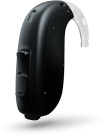
Where the main body sits changes the experience.
Behind-the-ear styles keep most of the electronics behind the ear, while in-the-ear styles place the main body inside the ear. Each approach offers different advantages for amplification, visibility, handling, comfort, battery size, and feature availability.
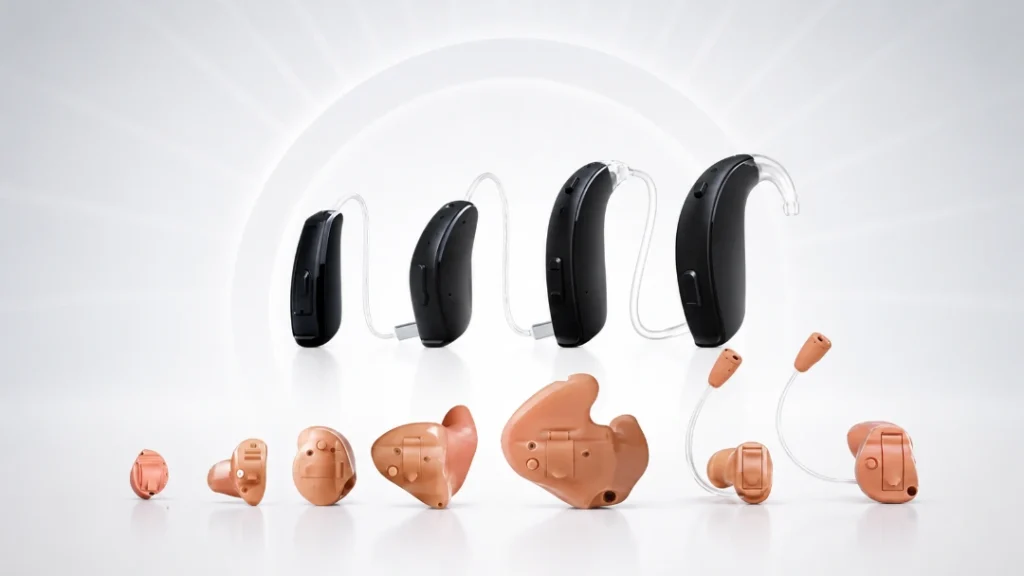
More room for power, controls, and connectivity.
Lower-profile options shaped around your ear.
Three variations built around a behind-ear housing.
The main body sits behind the ear, with sound delivered through an earmold, tube, or receiver positioned in or near the ear canal.

Behind-The-Ear (BTE)
A traditional BTE rests behind the ear and connects to an earmold in the outer ear. It is one of the most common styles and can provide strong amplification for a wide range of hearing needs.
- Space for Bluetooth and additional technology
- Works across many levels of hearing loss
- Suitable for users of many ages
- Strong amplification capability
- Larger batteries can be easier to handle
- More visible than smaller styles
- Can pick up wind noise
- May interfere with eyeglass arms
- Moisture and wax can affect receiver life
- Earmolds may create a plugged sensation
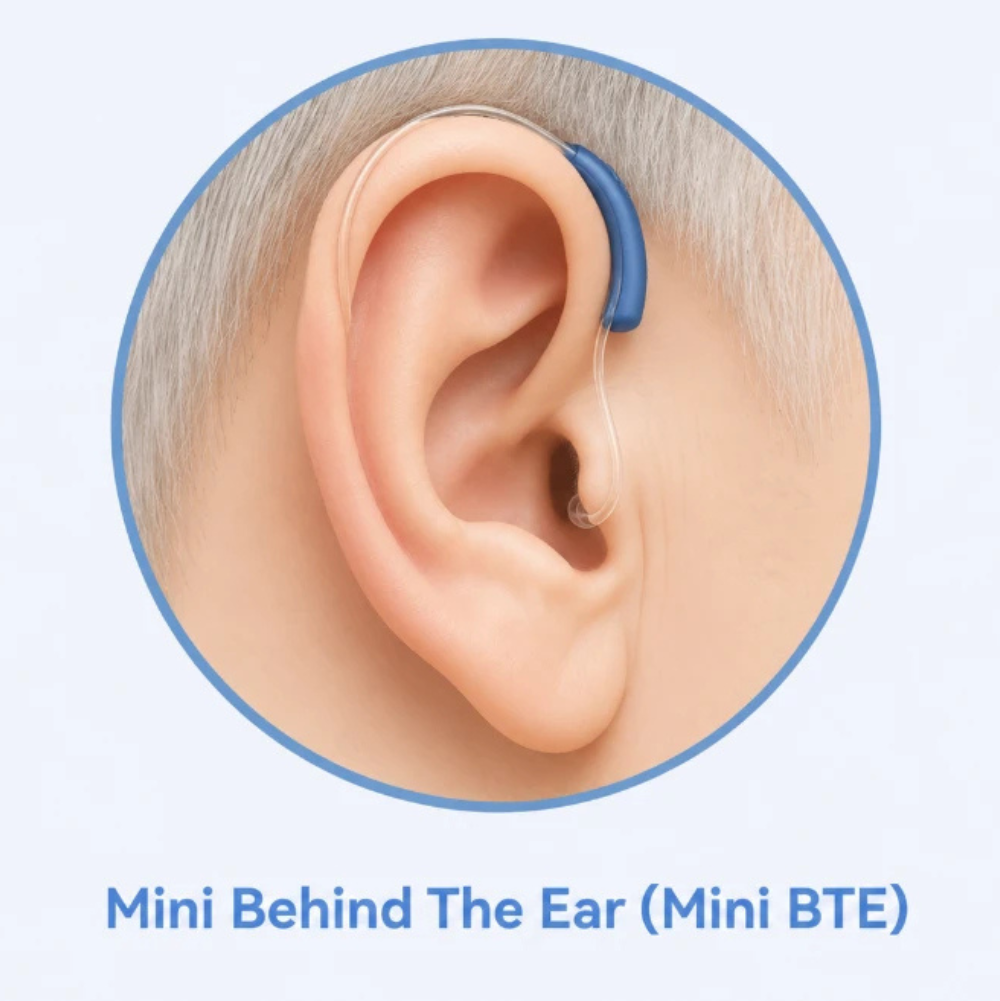
Mini Behind-The-Ear (Mini BTE)
Mini BTE devices use a smaller housing behind the ear with a thin tube extending toward the ear canal. Depending on the model, the sound outlet may use an earmold or a small canal receiver.
- Still has space for Bluetooth capability
- Less sensitive to wind than larger BTEs
- Can work with an earmold or canal receiver
- Open canal designs can reduce occlusion
- Still visible behind the ear
- Smaller size can be harder for some people to handle
- Can still compete for space with eyeglasses
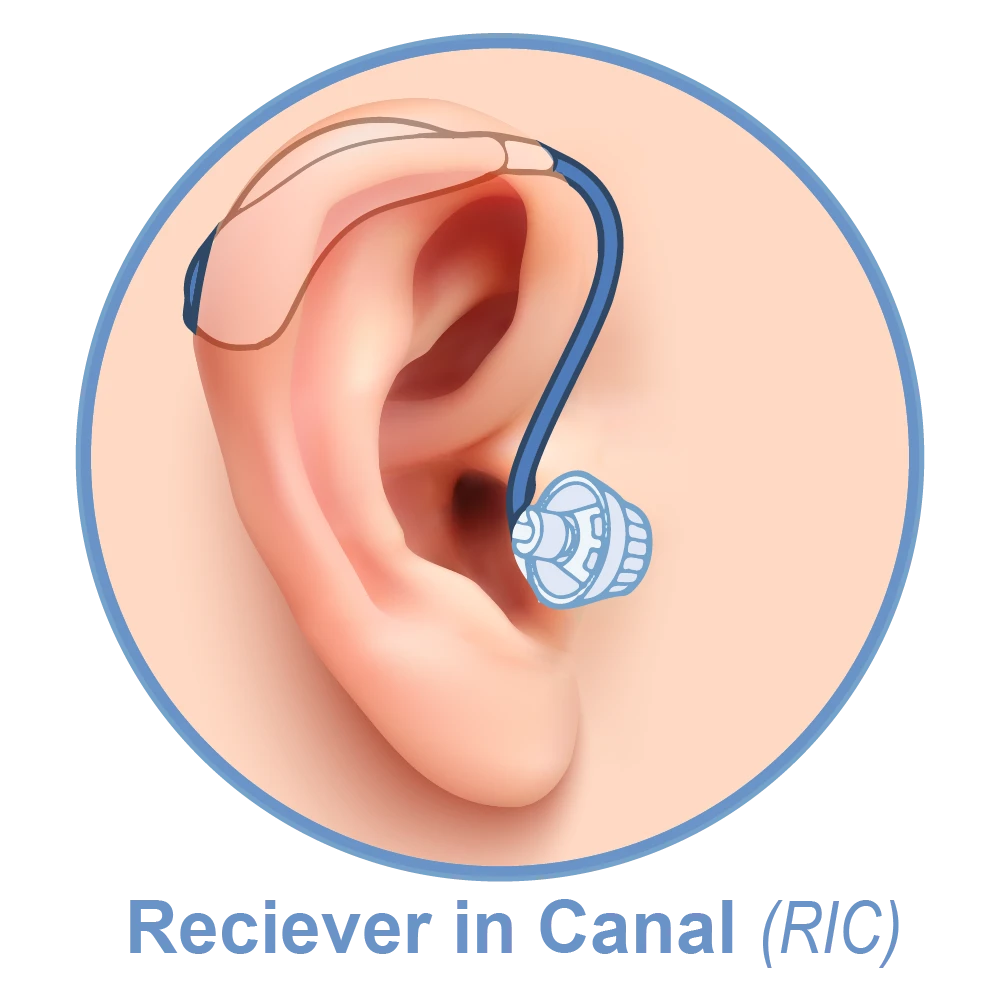
Receiver-In-Canal (RIC) / RITE
RIC hearing aids place a slim housing behind the ear while a narrow wire or tube leads to a receiver in the ear canal. This open design helps reduce the plugged sensation associated with more closed fittings.
- Supports Bluetooth technology
- Often ideal for mild-to-moderate hearing loss
- Easy-to-use controls
- Allows more natural airflow in the ear canal
- Requires regular cleaning
- Receiver is exposed to wax and moisture
- Wax buildup can shorten receiver life
Four custom-fit choices with increasingly discreet profiles.
In-the-ear hearing aids place the main device body inside the ear. Many are custom-made from an ear impression so the hearing aid can stay secure and comfortable.
Four custom-fit choices with increasingly discreet profiles.
In-the-ear hearing aids place the main device body inside the ear. Many are custom-made from an ear impression so the hearing aid can stay secure and comfortable.
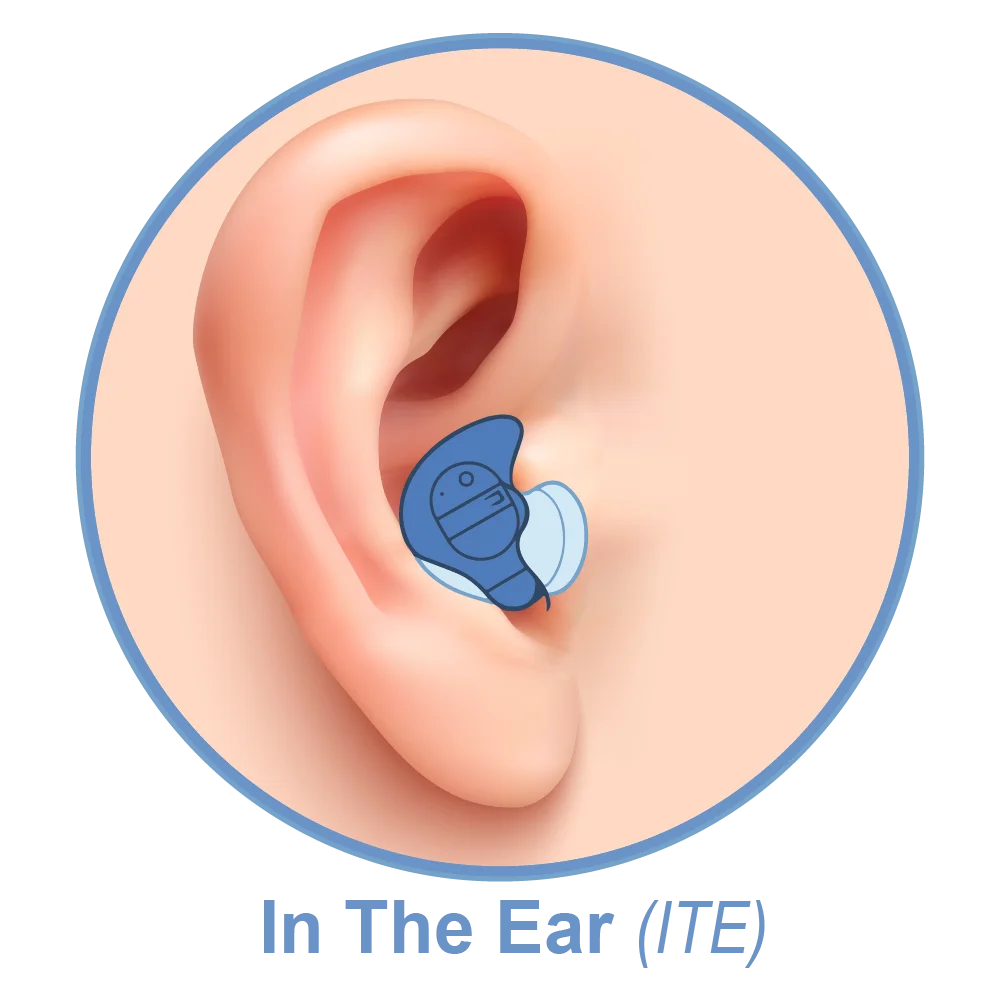
In-The-Ear (ITE)
ITE devices can fill the full outer-ear bowl or a smaller portion of it. Their larger in-ear size allows room for accessible controls, directional microphones, and larger batteries.
- Easy controls and handling
- Custom fit to the wearer’s ear
- Works with many types of hearing loss
- Lower profile than a traditional BTE
- Still visible in the outer ear
- Closed fit can create a plugged feeling
In-The-Canal (ITC)
ITC hearing aids are custom-built to fit partly inside the ear canal. They are smaller than ITE models while retaining more room for power and features than very small CIC or IIC devices.
- Longer battery life than CIC or IIC models
- Fairly discreet appearance
- Room for features such as directional microphones
- Can support mild to mildly severe hearing loss
- Can be affected by moisture and earwax
- May create some occlusion
- A portion remains visible in the outer ear


Completely-In-Canal (CIC)
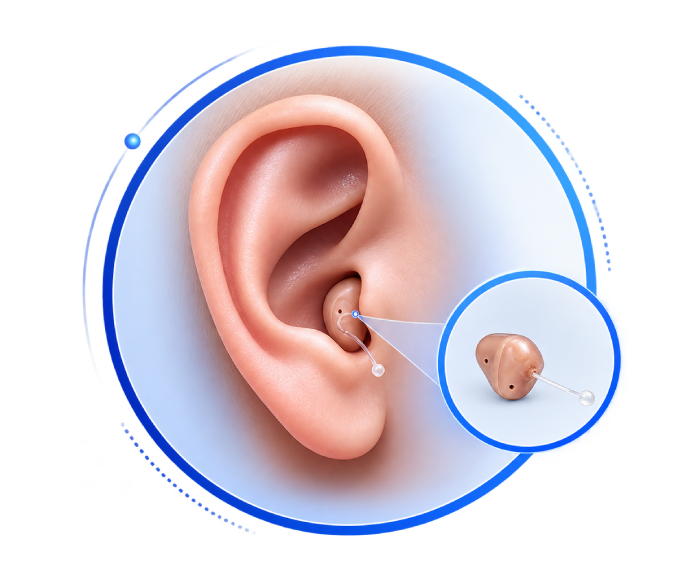
CIC hearing aids are custom-molded to sit inside the ear canal, with only a small removal tip extending outward. Their tiny size makes them attractive to people who prioritize a less visible hearing aid.
- Generally difficult for others to see
- High sound fidelity
- Minimal wind interference
- More exposed to moisture and earwax
- Shorter battery life
- Small size may be difficult with reduced dexterity
Invisible-In-The-Canal (IIC)
IIC devices sit entirely inside the ear canal and are custom-made for a comfortable fit. A small insertion and removal tip helps the wearer handle the hearing aid.
- Designed to be essentially invisible
- High sound fidelity
- Very little wind interference
- Shorter battery life
- Small size can be difficult to handle
- Vulnerable to moisture and earwax
- Limited room for controls and directional microphones

A different category: deep-canal, extended wear.
Lyric is placed deep in the ear canal and is designed to stay there continuously instead of being removed each night. It is manufactured by Phonak and requires professional placement and follow-up.
Style is only one part of finding the right hearing aid.
Hearing Associates of Las Vegas works with a diverse range of hearing aid brands and styles, giving patients many combinations of fit, technology, power, features, and price point.
Professional fitting and ongoing hearing aid care also help keep devices working well after the initial selection.
Not sure which hearing aid belongs on your shortlist?
Summerlin
1401 Hillshire Dr Suite 130, Las Vegas, NV 89134
Henderson
2821 W Horizon Ridge Pkwy Ste. 221, Henderson, NV 89052