
What Is a Hearing Evaluation?
A hearing evaluation is a comprehensive test that measures how well you hear sounds, understand speech, and identifies any issues that may be affecting your hearing health.
Regular evaluations help us detect changes early and recommend solutions so you can stay connected to the moments that matter most.

A screening can raise questions. An evaluation gives you answers.
A lot of people confuse the two — and it’s the reason hearing loss so often goes undiagnosed. Here’s the actual difference.
A quick pass/fail check
- Tells you whether hearing loss might be present
- Doesn't identify type, degree, or cause
- Not enough on its own for a diagnosis
A full diagnostic picture
- Identifies the type and degree of hearing loss
- Pinpoints how it's affecting speech understanding
- Gives you a clear, specific plan going forward
Your Hearing Evaluation Journey
One appointment, six stages, no surprises. Most first visits run about 60 to 90 minutes
Pre-evaluation consultation

Before you jump into any testing, our hearing instrument specialists like to sit down with you for a pre-hearing evaluation consultation. You are welcome to bring someone with you to your hearing evaluation to help you remember everything that will be discussed and to provide insights you may not have noticed.
During this consultation, our hearing specialist will discuss with you various things such as what brought you in for an evaluation, your medical history, and other topics to gain an understanding of how hearing loss may have already impacted your life.
Ear Canal Inspections

To start the testing, our hearing specialists will check your ear canal and tympanic membrane (eardrum). It is possible to have cerumen (earwax) blockage, which can lead to temporary hearing loss. However, if left untended, cerumen can damage the tympanic membrane,A wax blockage can cause temporary hearing loss. If it is left in place, it can also affect the eardrum. Hearing aids do not fix a wax blockage or an eardrum injury. We look in the ear before testing so we know whether the wax needs to come out first. If the eardrum needs medical care, we will tell you and help you find that care. Also, in some cases, hearing loss is caused by damage to the tympanic membrane.
After our specialists check your outer ear and the visible portion of your middle ear, they will move on to the next portion of the hearing evaluation.
Sound Hearing Tests
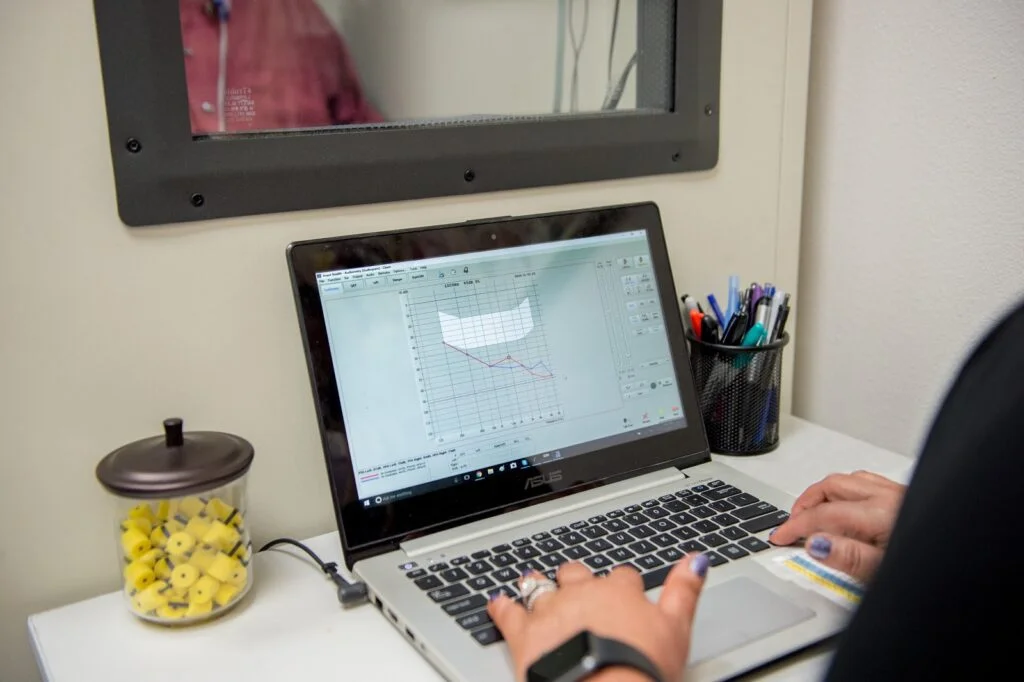
The sound test portion of our hearing evaluation will require you to enter our soundproof booth, so no outside sounds interfere with our tests. Once in the booth, these tests will take place:
Pure tone testing
With headphones on you, our hearing specialists will play various tones. As these sounds are played, our hearing specialists will ask you to indicate when you hear them. These tones will be at different volume levels and pitches to assess if there is any high-frequency hearing loss, and at what volume level do you start to be unable to hear clearly.
Bone conduction testing
To assess how the sound-conducting bones behind your ears are functioning, our hearing specialist will place a device behind your ears. Like the pure tone test, you will be asked to indicate as you hear the tones played by our hearing specialists.
Speech Hearing Tests
Once the sound-specific tests are completed, our hearing specialists will have you go through a couple of speech hearing tests.
Speech reception
Our hearing specialists will assess your ability to hear spoken words. As hearing loss can make it difficult to hear certain consonants, this test will check if your ability to perceive speech has become impaired.
Word recognition
Untreated hearing loss can also make recognizing words difficult, as the connection between the ear and brain is damaged by hearing loss. Our hearing specialists will check for this issue by saying a series of words and asking you to repeat them.
If you brought someone to your hearing evaluation, our hearing specialists may ask them to read off a list of words. This test can help assess if your hearing is more attuned to those who you are used to talking with regularly.
Post-evaluation consultation

After our hearing instrument specialists are finished with their tests, they will sit down with you to discuss the results. Sometimes, this consultation will simply confirm that your hearing is in good shape and our specialists will make recommendations to help keep your hearing healthy.
When there is hearing loss present, our hearing specialists will discuss with you the extent of your hearing loss, and depending on what type of hearing loss you have, what options are available to correct the loss. At our hearing clinics, if you have sensorineural hearing loss, hearing aids are the best route to correcting your hearing loss.
Hearing-aid selection

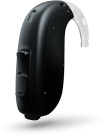
If hearing aids are the right next step, we help you compare styles and technology in the office. When you choose a device, we order it and call you when it arrives. Some devices include a trial so you can wear them in your own listening environments before you decide.
You're not just a patient here.
This visit can feel like a big step, especially if it’s your first one. We built the whole experience around making that easier — not rushing you, not talking over your head, and not making you sit through it alone.
- Bring a family member or friend — they're welcome in the room for every part of the visit.
- Every result is explained in plain language, with time for questions — no rushing to the next appointment.
- Yearly evaluations, not one-and-done — hearing changes gradually, so we track it over time.
Ready to find out what your hearing evaluation.
Summerlin
1401 Hillshire Dr Suite 130, Las Vegas, NV 89134
Henderson
2821 W Horizon Ridge Pkwy Ste. 221, Henderson, NV 89052